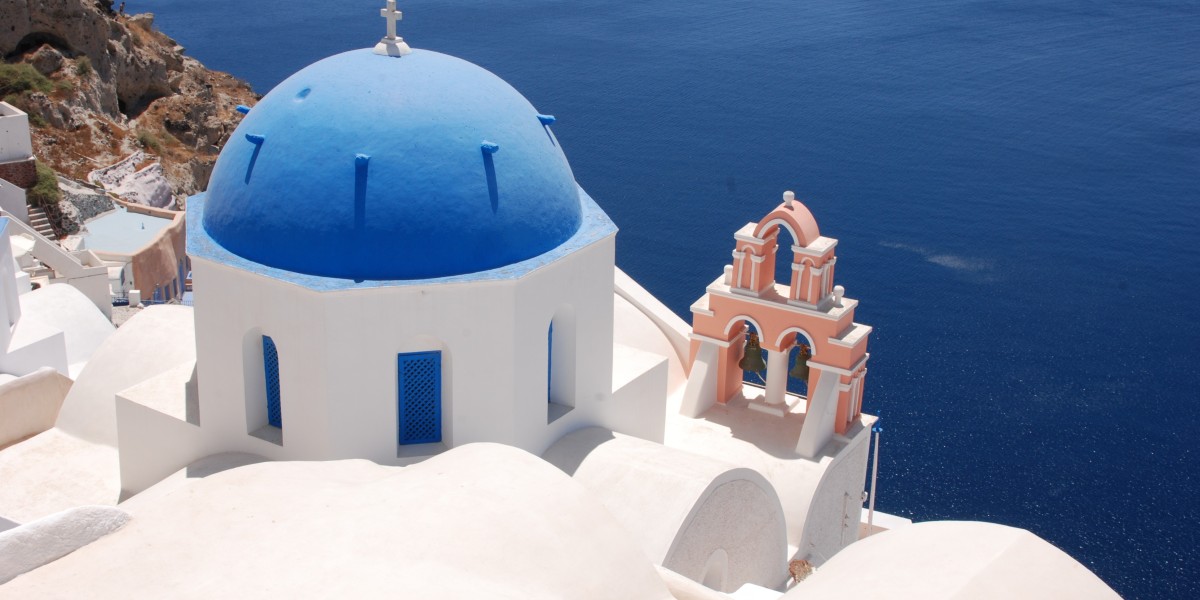

If you've ever seen a postcard from Greece, chances are it featured the iconic blue-domed churches of Santorini. These stunning structures, perched on volcanic cliffs above the deep blue Aegean Sea, have become one of the most recognizable travel images in the world. But there's far more to Santorini than what meets the eye on a souvenir calendar.
Why Are the Domes Blue?
The striking cobalt blue of Santorini's church domes isn't just an aesthetic choice — it carries deep cultural and spiritual meaning. In Greek Orthodox tradition, blue represents the heavens and the divine. Many of these churches are dedicated to specific saints, and the blue dome symbolizes the sky overhead, creating a visual connection between the earthly sanctuary and the heavens above. White walls, on the other hand, were historically painted with a limestone-based whitewash called "asbestolito," which had antimicrobial properties that helped protect against disease — a practical tradition that became an iconic look.
The Famous Three Domes of Oia
The most photographed cluster of blue domes sits in the village of Oia (pronounced "EE-ah"), on the northern tip of Santorini. Three churches — the Church of the Anastasis, the Church of the Three Saints, and a smaller chapel — stand together on the caldera rim, their vivid domes contrasting with the whitewashed buildings below. This is the view that draws thousands of visitors every evening to watch the sunset paint the sky in shades of orange, pink, and gold.
Finding the iconic viewpoint takes a bit of navigation through Oia's winding pedestrian streets. Head toward the Oia Castle ruins and follow the iconic blue dome signs that local shopkeepers have posted. The best time to photograph is during the golden hour — the last hour before sunset — when the warm light bathes the domes and creates the rich, saturated colors that make these churches so photogenic.
Beyond Oia: Firostefani and Beyond
While Oia gets most of the attention, the nearby village of Firostefani offers equally stunning dome views with far fewer crowds. The Church of St. Spyridon in Firostefani features two magnificent blue domes and sits along a cliffside path that provides breathtaking views of the caldera and the volcanic islands below.
For those willing to venture further, the Akrotiri peninsula on Santorini's southern tip offers yet another perspective. The Church of the Holy Epiphany near the ancient ruins of Akrotiri features a beautiful blue dome against a rugged, less developed landscape — a quieter, more contemplative alternative to the bustling northern villages.
Planning Your Visit
The ideal time to visit Santorini is from late April through October, with May and September offering the best balance of good weather and manageable crowds. July and August bring peak tourist season, when the narrow streets of Oia can become quite congested.
Getting around Santorini requires some planning. Public buses (KTEL) connect the main villages, but schedules can be limited. Renting a car or ATV gives you the freedom to explore at your own pace, though the winding cliffside roads require careful driving. For the adventurous, the Fira-to-Oia hiking trail (about 10 kilometers) offers spectacular caldera views along the entire route.
Whether you're a photographer chasing the perfect light, a culture enthusiast exploring Greek Orthodox heritage, or simply a traveler in search of beauty, Santorini's blue domes deliver an experience that lives up to the photographs. Just remember to look beyond the lens — the warmth of Greek hospitality, the taste of freshly caught seafood, and the whisper of the Aegean breeze are what truly make this island unforgettable.
? Photo: Blue Domed Church - Oia, Santorini, Greece
Photographer: George M. Groutas
License: CC BY 2.0
Source: Wikimedia Commons