
What Are the Northern Lights?
The aurora borealis, commonly known as the Northern Lights, is one of nature's most breathtaking spectacles. This dazzling display of green, purple, pink, and blue lights dancing across the night sky has captivated humans for thousands of years. The phenomenon occurs when electrically charged particles from the sun collide with gases in Earth's atmosphere, creating the luminous curtains of light that have inspired myths, legends, and scientific curiosity across cultures.
Norway sits in the heart of the auroral oval, the ring-shaped zone around the magnetic poles where auroras are most frequently observed. This geographic advantage makes it one of the best places on Earth to witness this celestial phenomenon, attracting hundreds of thousands of visitors each year who dream of seeing the lights for themselves.
Best Time to See the Northern Lights in Norway
The aurora season in Norway runs from September through March, with the peak viewing months being October, February, and March. During these months, the nights provide the dark skies essential for aurora visibility. The lights can appear anytime between 6 PM and 2 AM, though the prime window is typically between 9 PM and 11 PM.
Contrary to popular belief, the clearest skies often occur during the coldest periods. Winter high-pressure systems bring crisp, clear conditions ideal for aurora watching. The equinoxes in late September and late March are particularly active, with increased solar activity producing more dramatic displays.
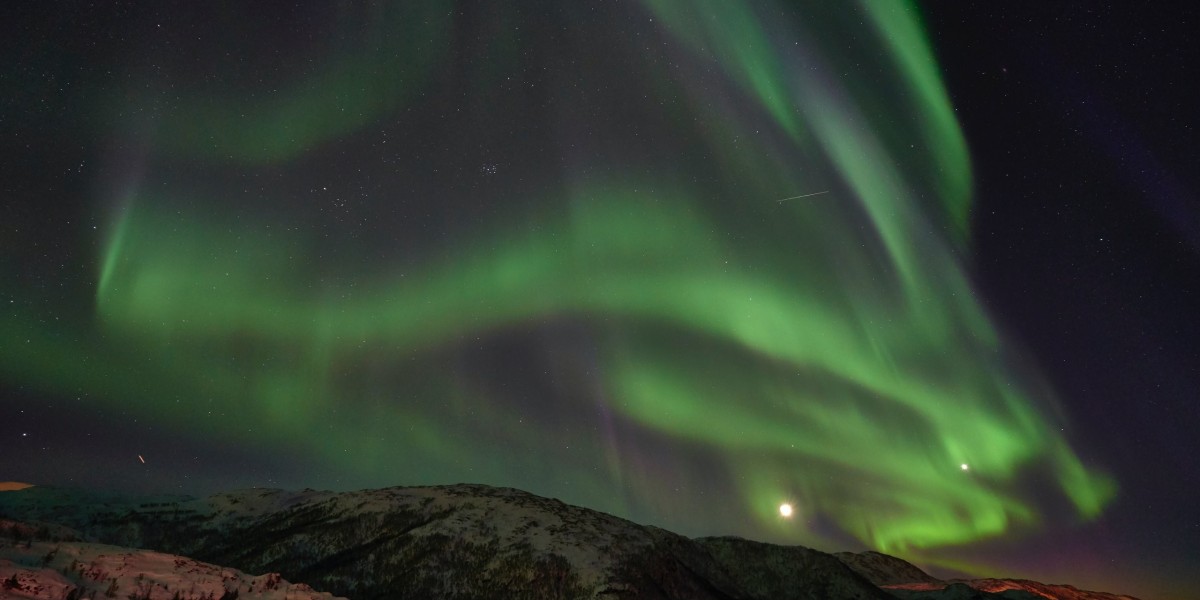
Photo: Northern Lights at Lauklines, Norway
Artist:
License: CC0 1.0 Universal (Public Domain)
Source: Wikimedia Commons
Top Locations for Northern Lights Viewing
Tromsø: Often called the "Capital of the Arctic," Tromsø sits at 69°N and offers excellent aurora viewing from September through March. The city provides numerous organized tours, including dog sledding under the lights and fjord cruises with aurora viewing decks.
Lofoten Islands: This dramatic archipelago combines the Northern Lights with stunning mountain and ocean backdrops. The reflective waters of the fjords mirror the lights, creating double displays that photographers dream about.
Svalbard: Located between 74°N and 81°N, Svalbard offers polar night viewing from mid-November to late January, meaning potential aurora sightings even during daylight hours.
Alta: Known as the "Town of the Northern Lights," Alta has a dedicated aurora research station and clear skies caused by its inland location away from coastal weather systems.
Kirkenes: Positioned near the Russian border, this eastern location often receives auroras when other Norwegian destinations are clouded over.
Tips for a Successful Aurora Hunt
Success in Northern Lights chasing requires patience and preparation. Download a reliable aurora forecasting app such as the Norwegian Meteorological Institute's "Yr" app or My Aurora Forecast to track KP index levels and cloud cover. Plan to stay for at least three nights to maximize your chances, as Norwegian weather can change rapidly.
Dress in proper thermal layers with windproof outer clothing. Standing still in sub-zero temperatures while waiting for lights can be dangerously cold without appropriate gear. Bring a thermos with a hot drink and a headlamp with a red-light setting to preserve your night vision.
For photographers, bring a sturdy tripod, a camera capable of manual settings, and use: ISO 1600-3200, aperture f/2.8 or wider, and exposure times of 8-15 seconds. Modern smartphones with night mode can capture surprisingly good aurora images.
Learn more about Northern Lights viewing in Norway: