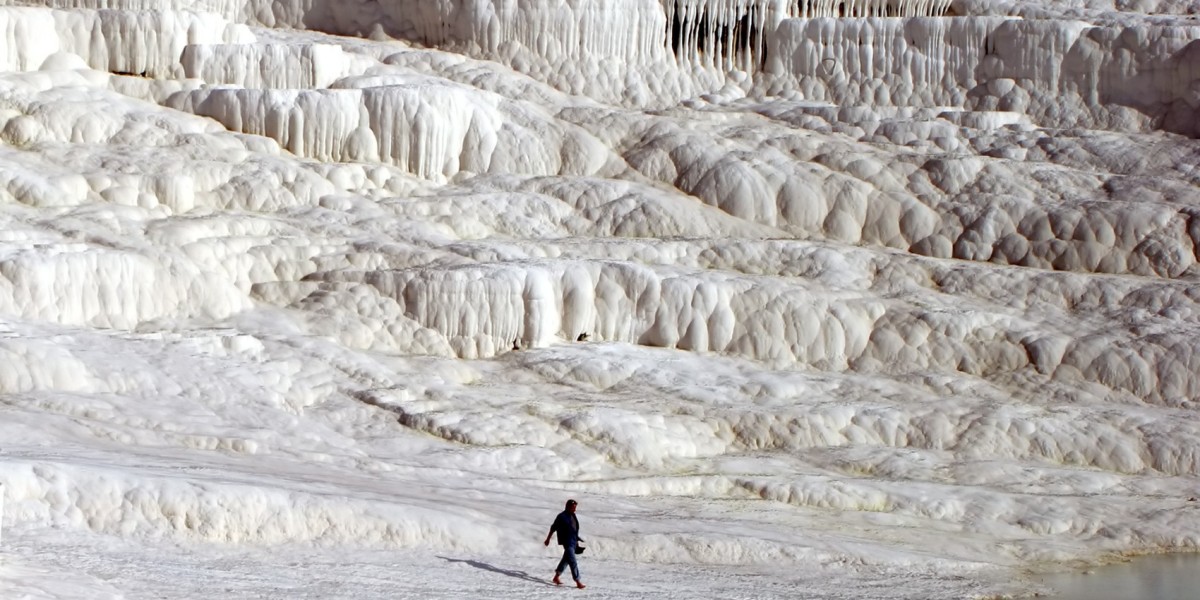

Tucked away in southwestern Turkey, Pamukkale feels like stepping onto another planet. The name means "cotton castle" in Turkish, and once you see those brilliant white terraces cascading down the mountainside, you'll understand exactly why. These aren't snow-covered peaks – they're travertine formations created over millennia by mineral-rich hot springs that have left behind layers of calcium carbonate, creating nature's own infinity pool complex.

? Photo: Hot Springs of Pamukkale Turkey
Photographer: Brocken Inaglory
License: CC BY-SA 3.0
Source: Wikimedia Commons
I still remember my first glimpse of Pamukkale at sunrise, when the morning light turned the white terraces into shades of gold and rose. The contrast against the clear blue sky made it look almost unreal, like something from a fantasy film set. Locals have been visiting these healing waters for thousands of years, and honestly, after experiencing them myself, I get why they've kept the secret for so long.
How the White Terraces Formed
The magic happens when groundwater heated by volcanic activity rises to the surface, carrying dissolved calcium bicarbonate. As this warm water reaches the air, it releases carbon dioxide and deposits the calcium carbonate that forms the iconic white pools. The terraces constantly shift and change – new ones form while others dry out, making each visit a little different. It's like watching geological art in progress.
Geologically speaking, Pamukkale represents one of the world's largest and best-preserved examples of thermal-related limestone deposition. The process began over 400,000 years ago and continues today, though much slower now that the area is protected. UNESCO recognized this wonder as a World Heritage Site in 1988, ensuring these formations will continue creating their magic for future generations.
The Ancient City Above the Springs
What makes Pamukkale truly special isn't just the natural wonder below – it's the ancient Roman city of Hierapolis perched on the plateau above. Founded in the 2nd century BCE, this was once a thriving spa town where Romans believed the waters could cure everything from skin diseases to rheumatism. You can still walk among the ruins of the theater, bathhouses, and necropolis while soaking in views of the terraces below.
The juxtaposition is stunning: marble columns and ancient mosaics against this stark white landscape. I spent hours just exploring – the theater could seat 15,000 people and still retains much of its original grandeur, while the Plutonium (gateway to the underworld in Roman belief) offers a fascinating glimpse into ancient spiritual practices. The Christian basilica and baptistery remind us this was also an important early religious center.
What to Know Before You Visit
- Best time to go: Early morning or late afternoon. Midday sun turns those white rocks into a mirror – bring sunglasses!
- Water temperature: Around 36-38°C (97-100°F) – perfect for relaxing but shockingly warm on a hot day
- Don't bring towels: They're provided, and honestly, they're cleaner than anything you'd pack
- Shoes required: The travertine can be slippery when wet, and you'll want something for the archaeological site
- Stay overnight: The thermal hotels right next to the terraces let you watch sunset colors change over the landscape
Beyond the Tourist Trail
While most visitors stick to the main terraces, there's a whole world to explore. The nearby Karahayit red springs offer a completely different experience – iron-rich waters that leave your skin feeling like silk. And if you're up for a short drive, the ancient city of Laodicea (mentioned in the Bible) has some of the best-preserved ruins in the region, including a massive stadium and marble streets.
For the adventurous, the surrounding Denizli province offers hiking trails through the lush Menderes Valley, where you can see the travertine formation process in action at smaller springs. The village of Karahayit means "black castle" in Turkish, and its red springs create their own therapeutic experience – the iron oxide in the water leaves a distinctive reddish tint on your skin.
? Learn more about Pamukkale:
Whether you're drawn by the otherworldly landscapes, ancient history, or therapeutic waters, Pamukkale delivers an experience that stays with you long after you leave. Just remember to approach with respect – these formations took millennia to create, and protecting them ensures future travelers can share in the wonder.