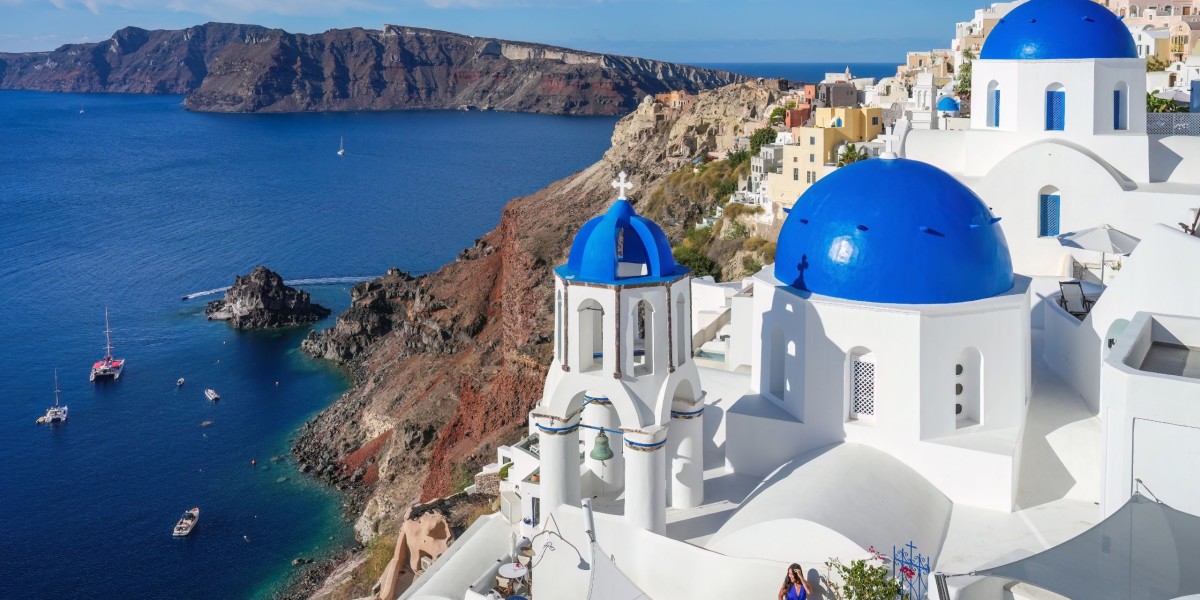

<p>Santorini, Greece's most spectacular island, sits at the edge of the Aegean Sea, perched atop a massive volcanic caldera created by the Minoan eruption thousands of years ago. This natural amphitheater, with its dramatic cliffs plunging into turquoise waters, has captivated travelers since ancient times and remains one of the world's most photographed destinations today.</p>
<img src="https://upload.wikimedia.org/wikipedia/commons/2/27/1000_Three_domes_of_Oia_in_Santorini_Photo_by_Giles_Laurent.jpg?utm_source=commons.wikimedia.org&utm_campaign=imageinfo&utm_content=original" alt="Blue domed church in Santorini, Greece" style="width:100%;max-height:500px;object-fit:cover;border-radius:8px;margin:20px 0;">
<div style="margin:20px 0;padding:12px 16px;background:#f8f9fa;border-left:3px solid #2196F3;border-radius:4px;font-size:13px;color:#555;">
<p style="margin:0 0 4px 0;"><strong>? Photo:</strong> <a href="https://upload.wikimedia.org/wikipedia/commons/2/27/1000_Three_domes_of_Oia_in_Santorini_Photo_by_Giles_Laurent.jpg?utm_source=commons.wikimedia.org&utm_campaign=imageinfo&utm_content=original" target="_blank" rel="noopener">1000 Three domes of Oia in Santorini Photo by Giles Laurent.jpg</a></p>
<p style="margin:0 0 4px 0;"><strong>Photographer:</strong> <a href="https://commons.wikimedia.org/wiki/User:Giles_Laurent" target="_blank" rel="noopener">Giles Laurent</a></p>
<p style="margin:0 0 4px 0;"><strong>License:</strong> <a href="https://commons.wikimedia.org/wiki/Public_Domain" target="_blank" rel="noopener">Public Domain</a></p>
<p style="margin:0;"><strong>Source:</strong> <a href="https://commons.wikimedia.org" target="_blank" rel="noopener">Wikimedia Commons</a></p>
</div>
<h3>Why Santorini Has Captivated Travelers for Millennia</h3>
<p>The allure of Santorini dates back to ancient mythology. The island's dramatic volcanic caldera was formed by the devastating Minoan eruption around 1600 BCE, which is believed to have inspired Plato's story of Atlantis. This catastrophic event created one of nature's most spectacular geological features—a nearly 16-mile-wide circular sea that has become Santorini's defining characteristic.</p>
<p>For centuries, Greek travelers and writers have been drawn to the island's striking contrast: brilliant white-washed buildings with blue domes perched on cliffs that drop 100+ feet into the Aegean. The volcanic soils produce the world-renowned Santorini wine, while the island's unique architecture has become synonymous with Greek island life.</p>
<h3>The Famous Blue Domes of Oia</h3>
<p>Oia, Santorini's most photographed village, sits at the northern end of the island's caldera. The village's signature feature—its blue domed churches—dates back to the 16th century when the Ottoman Turks ruled the Aegean. These distinctive domes, painted in varying shades of cobalt, royal blue, and azure, became a deliberate choice by the local population to distinguish their homes from the white-washed structures of other Greek islands.</p>
<p>According to Greek cultural historians, the blue color has symbolic significance. In the Mediterranean, blue represents purity, the divine, and the connection to the sea and sky. For the Orthodox Christian communities of Santorini, the blue domes of their churches served as spiritual beacons visible from sea and land, marking the location of active worship in this volcanic landscape.</p>
<p>Today, Oia remains one of the world's most popular sunset viewing destinations. The village transforms at twilight when the dramatic caldera waters shift from deep blue to fiery orange, painting the sky in colors that photographers and painters have described as nothing short of magical. This natural spectacle has made Oia a UNESCO World Heritage-listed tourist attraction and the site of annual international photography competitions.</p>
<h3>Exploring the Caldera's Hidden Gems</h3>
<p>While Oia receives the most attention, Santorini's caldera coastline offers numerous lesser-known treasures. The village of Fira, Santorini's capital, dominates the caldera's edge with its modern hotels, restaurants, and the iconic white-washed houses with blue domes that cascade down to the water. Fira also serves as the main transportation hub, offering ferry connections to other Cycladic islands and organized tours to the underwater volcano.</p>
<p>For those seeking solitude, the village of Imerovigli—known as the "Balcony of the Aegean"—offers stunning caldera views without the crowds. This small settlement provides a quieter alternative for travelers who want breathtaking scenery without the tourist atmosphere of Fira or Oia.</p>
<h3>Unique Wine Production in the Volcanic Soils</h3>
<p>Santorini's volcanic soils produce one of the world's most distinctive wine regions, home to the world-famous Assyrtico grape. This ancient white variety, cultivated for over 2,000 years, thrives in the island's unique volcanic limestone soils, which impart a mineral quality to the wine that's impossible to replicate elsewhere.</p>
<p>Santorini wines are characterized by their bold acidity, citrus and olive notes, and distinctive mineral finish. The volcanic ash in the soil helps the Assyrtico grape develop deep, complex flavors that have earned Santorini wines international acclaim. Many wineries in the region offer guided tours where visitors can learn about the island's unique winemaking traditions and taste some of the world's most distinctive wines.</p>
<h3>Practical Travel Tips for Santorini</h3>
<p>When planning a trip to Santorini, several practical considerations will enhance your experience. The island operates on Eastern European time, which is one hour ahead of mainland Greece. During the peak summer season (June through August), accommodation prices can increase dramatically, and popular sites like Oia's sunset viewing platforms require early arrival to secure good spots.</p>
<p>The best time to visit Santorini for most travelers is during the shoulder seasons of April-May or September-October. During these months, the weather remains pleasant at a mean of 24°C (75°F), the crowds are more manageable, and accommodation prices are more reasonable. Winter visits offer a quieter experience, though some smaller restaurants and shops may close during the colder months.</p>
<p>Transportation on Santorini is primarily by bus, taxi, or car rental. The island's narrow streets, especially in Oia, can be challenging for large vehicles, so consider renting a compact car or using local buses. Ferries from Thira (Santorini's main town) connect to Paros, Naxos, and other Cycladic islands, though schedules should be checked well in advance during peak season.</p>
<div style="margin:20px 0;padding:12px 16px;background:#f0fff0;border-left:3px solid #4CAF50;border-radius:4px;font-size:13px;">
<p style="margin:0 0 8px 0;"><strong>? Learn more about Santorini:</strong></p>
<ul style="margin:0;padding-left:20px;">
<li><a href="https://en.wikipedia.org/wiki/Santorini" target="_blank" rel="noopener">Wikipedia — Santorini</a></li>
<li><a href="https://en.wikivoyage.org/wiki/Santorini" target="_blank" rel="noopener">Wikivoyage Travel Guide</a></li>
<li><a href="https://www.google.com/maps/place/Santorini" target="_blank" rel="noopener">Google Maps</a></li>
<li><a href="https://www.tripadvisor.com/Search?q=Santorini" target="_blank" rel="noopener">TripAdvisor Reviews</a></li>
</ul>
</div>
<p>#Santorini #Greece #Travel #IslandLife #Volcano #Aegean #CulturalHeritage #Sunset #WineTourism #GreeceTravel</p>