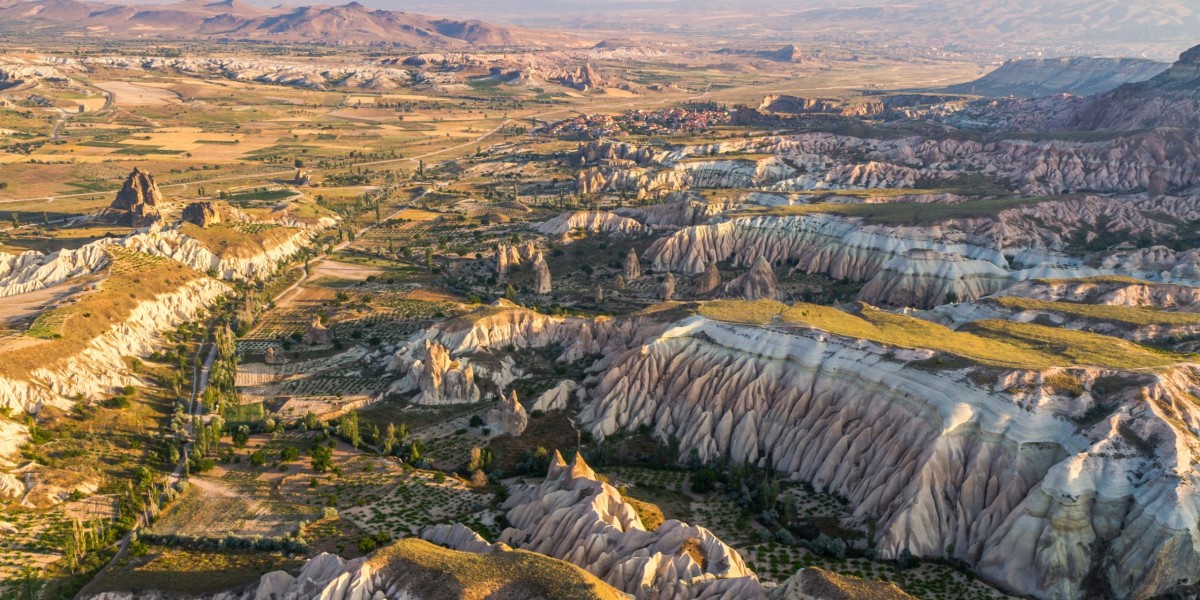

If you've ever dreamed of floating silently above a landscape that looks more like another planet than anywhere you've been before, Cappadocia in central Turkey should be at the top of your travel list. This UNESCO World Heritage region has been sculpted by millions of years of volcanic activity and erosion into one of the world's most distinctive landscapes – a place where fairy chimneys tower over cave cities, and hundreds of colorful balloons drift through the dawn sky each morning.
? Photo: Cappadocia Aerial View Landscape
Photographer: Benh Lieu Song
License: CC BY-SA 4.0
Source: Wikimedia Commons
What Makes Cappadocia So Special?
The story begins about 30 million years ago when volcanic eruptions from Mount Erciyes blanketed the region with ash. Over eons, this ash compacted into a soft rock called tuff, while harder basalt caps protected some areas from erosion. The result? Thousands of distinctive cone-shaped formations carved by wind and water – including the famous fairy chimneys that stand like sentinels across the valley floor.
What makes this place truly magical for visitors today isn't just the geology – it's the human relationship with this landscape over millennia. Ancient peoples carved entire underground cities here, some extending six stories deep with ventilation shafts, stables, and churches. They also created cave dwellings that were later used by early Christian communities fleeing Roman persecution.
The Hot Air Balloon Experience
Riding a hot air balloon at sunrise is Cappadocia's signature experience, and for good reason. As the burner roars to life and you lift gently from the launch field, the entire valley unfolds below you. The contrast between the deep orange glow of the balloons and the soft rose-colored rock formations at dawn creates a photographer's paradise.
Flights typically last about an hour, drifting silently between the fairy chimneys and over the Göreme Valley. Different operators offer various experiences – some include champagne toasts upon landing, while others provide smaller basket groups for more intimate flights. Safety standards are generally high, with pilots trained in both flight procedures and emergency protocols.
Best Viewpoints and Photography Spots
While the balloon ride gives you the iconic perspective, there are several ground-level viewpoints that offer equally stunning views. Sunset Point in Göreme provides a panoramic vista of the entire valley, while the Love Valley (Aşk Vadisi) showcases some of the most photogenic fairy chimneys, especially during golden hour.
For the best balloon photography, position yourself on the slopes of the Uçhisar Castle rock – you'll get unobstructed views of the flight path as balloons float past at various altitudes. Early morning light (around 6-7 AM) provides the softest shadows and warmest tones.
Planning Your Visit
The peak season runs from April through October, with May and September offering the best balance of comfortable weather and manageable crowds. Winter visits have their charm too – fewer tourists, lower prices, and the occasional snow-dusted fairy chimneys make for dramatic photos.
Most travelers stay in Göreme village, which offers easy access to both launch sites and major attractions. Cave hotels here range from budget-friendly to luxury, giving you the chance to actually sleep in the very rock formations you've come to admire.
No trip to Cappadocia is complete without exploring the Open Air Museum, where rock-cut churches adorned with medieval frescoes tell stories of early Christian communities. The nearby underground city of Derinkuyu descends eight levels into the earth – a fascinating glimpse into how entire communities once lived beneath the surface.
Practical Tips for Travelers
Book your balloon flight at least two weeks in advance during peak season – slots fill quickly and last-minute prices are significantly higher. Most reputable companies offer hotel pickup, but confirm this when booking. Wear comfortable layers as morning temperatures can be cool even in summer.
Bring cash for small purchases – while major hotels accept cards, smaller restaurants and local artisans often prefer lira. The local cuisine centers around dishes like testi kebab (slow-cooked meat in clay pots) and manti (Turkish dumplings), perfect after an early morning balloon adventure.
Cappadocia isn't just a destination; it's a feeling of wonder that stays with you long after you've left. Whether you're sipping Turkish tea while watching balloons drift overhead or exploring hidden cave churches lit only by your phone flashlight, this place reminds us that the most extraordinary travel experiences often happen when we least expect them.
Hiking Through the Valleys
The network of valleys carved through the tuff formations offers miles of hiking trails connecting some of Cappadocia's most spectacular sights. The Rose Valley (Güllüdere) gets its name from the pinkish hue of the rock at sunset, while the Pigeon Valley (Güvercinlik) once housed dovecotes carved into the cliffs – the pigeon droppings were historically used as fertilizer for the region's vineyards.
Trail maps are available at local shops, but you can also join guided hikes led by local experts who share stories about the geology, history, and legends of each location. The trails range from easy walks suitable for families to more challenging routes that involve scrambling over rocky terrain.
The Underground Cities
Cappadocia's underground cities represent engineering marvels carved entirely by hand. Derinkuyu, the largest excavated to date, could shelter approximately 20,000 people with its stables, churches, and ventilation shafts. The narrow passages and low ceilings require ducking, giving visitors a sense of what life must have been like for those seeking refuge from invading armies.
Cavusin offers a different experience – an ancient village where cave houses have been integrated into modern living. You can see families who still maintain homes in caves alongside newer structures, creating a unique blend of ancient and contemporary life.
Local Culture and Crafts
Beyond the geological wonders, Cappadocia preserves a rich cultural heritage. Traditional pottery workshops in Avanos still use techniques passed down through generations, shaping clay on kick wheels powered by foot. The red clay from the Kizilirmak River gives local pottery its distinctive warm hue.
The region's wine production has been revived in recent decades, with several boutique wineries offering tastings of local varietals. Many of the grapes are grown in vineyards carved directly into the rock faces, creating terraced rows that follow the natural contours of the landscape.
? Learn more about Cappadocia: